
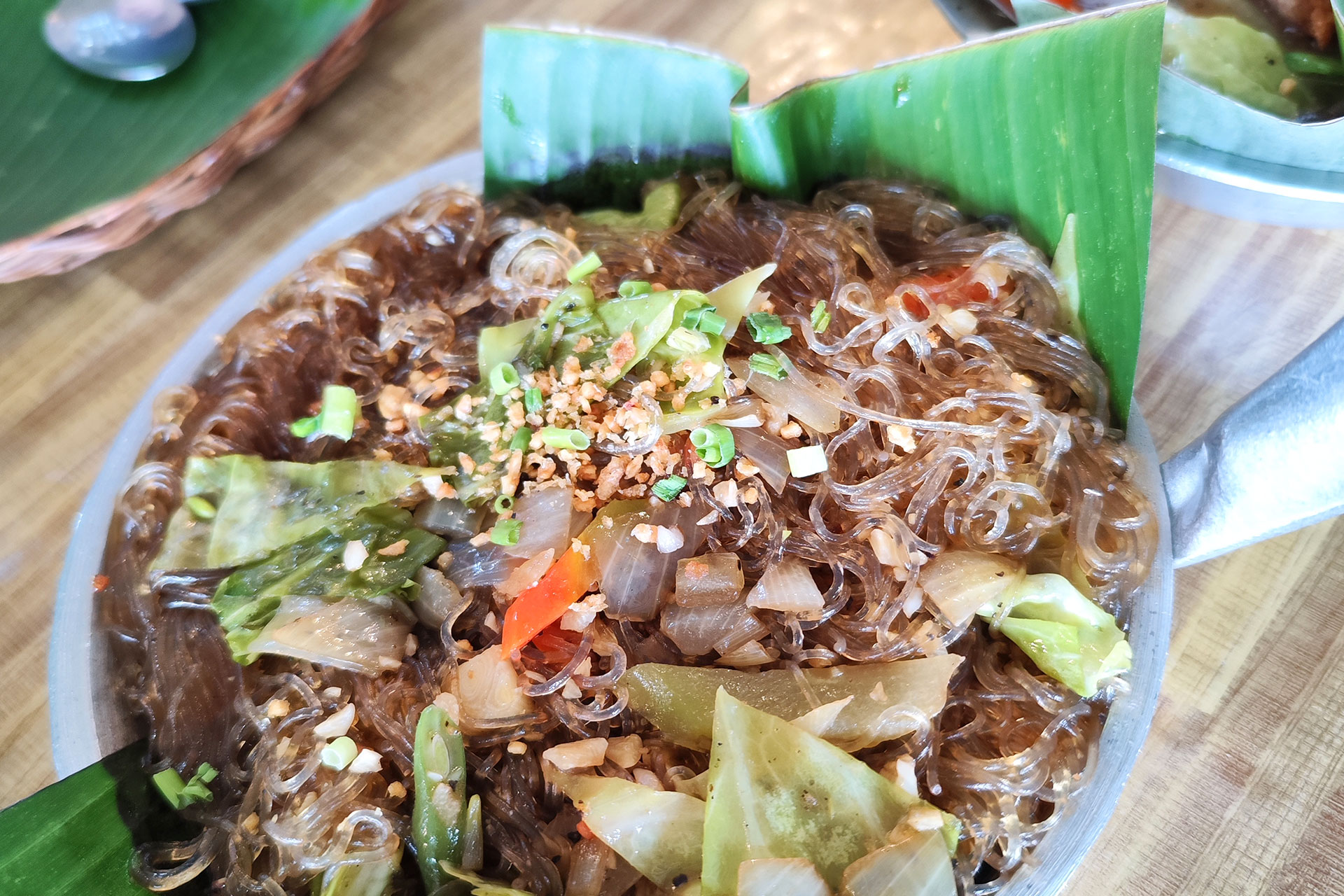
Pancit Sotanghon Guisado
I grew up in the Philippines, where pancit (noodles) in all its forms – especially pancit sotanghon guisado – was more than a staple; it was a ritual. We serve noodles at birthdays and fiestas because their length is believed to symbolize long life and good fortune. As a child, no celebration was complete without a generous bilao of pancit at the centre of the table. It was a dish that marked continuity – of family, of community, of another year survived and hoped for. Only much later did I begin to appreciate how fitting that symbolism is for my life as a lawyer. Pancit sotanghon guisado became my culinary analogue – not to the longevity of protracted cases, but to the sustaining commitment to justice and principled reasoning. The work of upholding the rule of law, much like the unbroken strands of sotanghon noodles, demands that we never cut corners and never shorten the thread.
5
servings15
minutes20
minutes35
minutesIngredients
250 g 250 sotanghon noodles (mung bean glass noodles)
400 g 400 chicken breast, chopped (vegetarian option: use firm tofu or shiitake mushrooms)
3 3 lap cheong sausages, chopped (optional)
150 g 150 carrots, julienned
100 g 100 string beans, julienned
250 g 250 cabbage, chopped
1 medium 1 onion, thinly sliced
5 cloves 5 garlic, minced
6 tbsp 6 soy sauce (adjust to taste)
2 tbsp 2 oyster sauce or fish sauce (optional)
Salt (as needed)
Ground black pepper (as needed)
180 ml 180 water (adjust as needed)
Cooking oil
Toasted garlic (for garnish)
Spring onions, finely chopped (for garnish)
Calamansi (small Filipino limes; substitute with lemon if unavailable)
Directions
- Soak the noodles in a bowl of water for about 10 minutes or until they soften. Drain the noodles and set aside.
- Blanch the carrots and cabbage in boiling water for 2 to 3 minutes until slightly tender but still crisp. Set them aside.
- Heat oil in a large pan or wok over medium heat. Add the sliced onion and minced garlic and sauté for a minute or until aromatic.
- Add the chopped chicken and lap cheong sausages. Cook over medium-high heat until the chicken is lightly browned.
- Pour in the soy sauce, oyster sauce (or fish sauce), and ¾ cup water. Give a quick stir, then let it boil.
- Add the string beans. Cook for two minutes.
- Add the drained noodles. Toss gently until the noodles absorb the liquid and all ingredients are well combined. If the mixture is too dry, add water 2 tbsp at a time.
- Add the blanched carrots and cabbage. Season with salt and pepper. Toss gently and cook for 2 to 3 minutes.
- Transfer to a serving dish. For an authentic touch, I recommend using a bilao (a traditional shallow woven bamboo tray) or any platter lined with banana leaves. The leaves add a subtle tropical aroma.
- Generously sprinkle toasted garlic and chopped spring onions over the top. Serve with halved calamansi on the side for each person to squeeze over their portion, adding a bright, tangy finish.
Equipment
- Large pan or wok
- Pot for blanching
- Mixing bowl
- Colander
Notes
- For an authentic touch, I recommend using a bilao (a traditional shallow woven bamboo tray) or any platter lined with banana leaves. The leaves add a subtle tropical aroma.
- For a vegetarian version, use firm tofu or shiitake mushrooms instead of chicken.